


AI Is Smart, But Not as You
- Chisom Ugonna
- Dec 3, 2025
- 5 min read
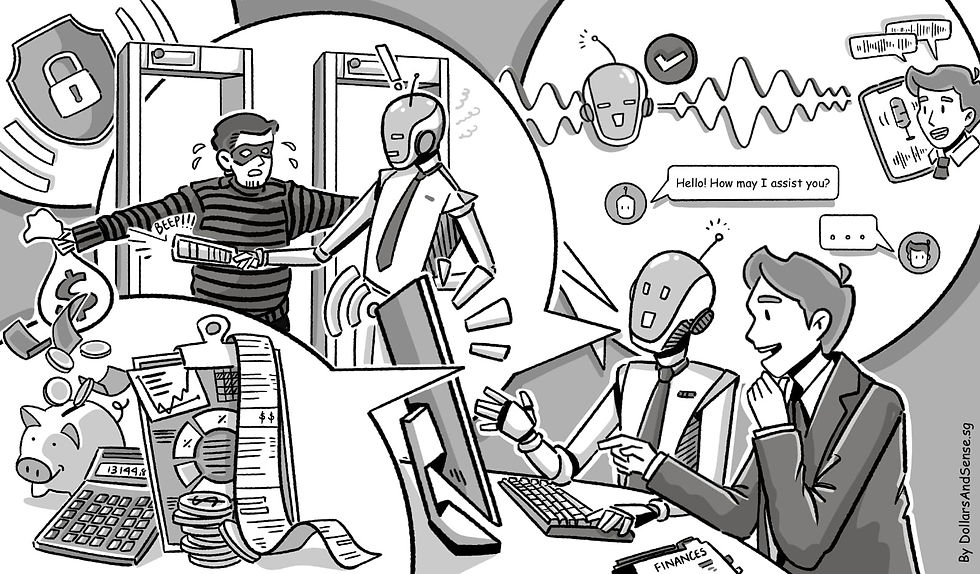
Artificial intelligence has become one of the most talked-about technologies of our time. It writes essays, analyses medical scans, recommends financial decisions, and even drives cars. In some cases, it performs tasks faster and with more consistency than humans. But speed is not intelligence. And prediction is not understanding.
The closer we look at how AI behaves in the real world under pressure, in unpredictable environments, or outside perfect training scenarios, the clearer it becomes. AI is smart, but not in the way humans are. And not even close to being as smart as humans.
Below is a detailed look at why AI struggles with human-level cognition, why it fails in surprising ways, and why human roles are far from being replaced.
AI Predicts Patterns. It Does Not Understand the World
Large models operate through statistical associations, not comprehension. They do not know facts. They generate what looks like knowledge based on patterns in data.
This is why AI can describe quantum physics and still mislabel a simple household object.
Humans, on the other hand, operate with concepts, meaning, intuition, and lived experience. We understand how the world works even before we can explain it.
AI only mirrors what it has seen.
Two well-known examples illustrate this gap clearly:
An early classifier confidently misidentified a panda as a gibbon simply because noise was added to the image. The noise was invisible to humans, but enough to corrupt the model’s pattern match.
A wolf vs husky detector learned that snow equals wolf. It was not identifying animals at all. It was identifying scenery.
These are not glitches. They are architectural limits.
AI Breaks the Moment Context Shifts
Humans adapt instantly to new conditions. AI does not. When the context changes, AI behaves unpredictably, and sometimes dangerously.
Below is a table summarizing ten major real-world AI failures across different industries. These are documented incidents where AI misinterpreted context, made an incorrect decision, or failed under real-world pressure.
Major Real-World AI Context Failures
Context Failure | Date | Details | Impact | Company Involved |
Tesla Autopilot crash | 2016 | Car failed to distinguish a white truck against bright sky | Fatality and federal investigation | Tesla |
Uber self-driving crash | 2018 | System failed to classify a pedestrian pushing a bike | Fatality during road testing | Uber ATG |
Boeing 737 MAX MCAS issue caused by automation responding to faulty sensor input | 2018 to 2019 | Flight automation triggered repeatedly due to incorrect sensor data | Two crashes and global fleet grounding | Boeing |
Knight Capital trading algorithm malfunction | 2012 | Old test code activated during live trading | 440 million dollar loss in 45 minutes | Knight Capital |
Apple Card credit limit algorithm disparity | 2019 | Women received lower credit limits compared to men | State investigation into gender bias | Apple and Goldman Sachs |
IBM Watson for Oncology misguidance | 2018 | Model recommended unsafe cancer treatments due to synthetic training data | Hospitals paused or abandoned deployment | IBM |
Google Photos misclassification issue | 2015 | Vision model tagged Black people incorrectly | Public apology and long term policy changes | |
British A Level grading algorithm controversy | 2020 | Algorithm downgraded students in disadvantaged areas | National outcry and reversal of algorithmic results | UK Government and Ofqual |
Amazon hiring tool bias | 2014 to 2017 | Algorithm penalized CVs with female associated terms | Project cancelled internally | Amazon |
COMPAS criminal risk algorithm concerns | 2016 | Higher risk scores assigned to Black defendants | National debate on algorithmic justice | Northpointe |
These incidents show a clear trend. The moment real-world unpredictability appears, AI becomes fragile. Where a human would rely on judgment, intuition, or situational awareness, AI freezes, misreads, or over commits to a flawed interpretation.
AI Has No Common Sense
A five-year-old knows you should not drink shampoo, that people get tired, or that an object cannot be in two places at once. AI knows none of this unless it is explicitly presented in the training data. Even then, it may not generalize correctly.
This is why common-sense reasoning benchmarks exist as an entire research category. Machines struggle with basic physical reasoning, emotional inference, or understanding human motives. Humans navigate these effortlessly.
Hallucination. AI Speaks With Confidence Even When It Is Wrong
Hallucination is not a bug. It is a natural result of a system that predicts what sounds correct, not what is correct.
It has already caused real-world harm.
A New York attorney submitted AI generated legal citations that turned out to be fabricated.
A Canadian airline chatbot assured a customer of a refund policy that did not exist.
Academic chatbots have produced fabricated scientific studies, authors, and journals when asked for references.
Below is a table summarizing notable hallucination and bias incidents.
Hallucination and Bias Incidents
Hallucination or Bias Case | Year | Sector | Outcome |
Fake legal citations in court filing | 2023 | Law and Legal Tech | Lawyer sanctioned and broad concerns raised about LLM reliability |
Airline chatbot misinformation | 2023 | Customer Service | Court ruled the airline responsible for AI generated misinformation |
Amazon hiring algorithm bias | 2017 | Recruitment | Tool cancelled after exposing gender bias patterns |
Google Photos tagging issue | 2015 | Computer Vision | Significant backlash and immediate product adjustments |
COMPAS risk assessment bias | 2016 | Criminal Justice | Investigations into race bias and transparency |
Facial recognition false arrest cases | 2020 | Policing | Wrongful arrests resulted in policy reviews |
GPT generated academic references | 2022 to 2023 | Education and Research | Universities issued warnings about fabricated citations |
Apple Card credit scoring concern | 2019 | Finance | Regulatory scrutiny over gender based disparities |
Twitter algorithm cropping bias | 2020 | Social Media | Algorithm retired after detecting bias toward lighter skin tones |
Medical AI misdiagnosis cases | Various | Healthcare | Hospitals paused deployments pending further evaluation |
Hallucination highlights a fundamental reality. AI does not know what is true. It knows what looks like truth. Only humans can verify and assign meaning.
AI Amplifies Human Bias Instead of Correcting It
AI systems trained on real-world data absorb real-world flaws. But unlike humans, they cannot recognize or correct them.
Bias has appeared in:
loan approvals
hiring decisions
judicial risk scoring
face recognition
insurance assessments
predictive policing
In many cases, AI systems magnify bias because they rely on statistical shortcuts that humans would immediately question.
A few examples that made global headlines make this clear.
A health risk algorithm used in US hospitals prioritized white patients for extra care because it used previous spending as a proxy for need. Historical inequality corrupted the prediction.
Facial recognition systems performed poorly on darker skin tones and contributed to several false arrests.
Predictive policing tools allocated more officers to neighborhoods with historical arrest patterns, reinforcing over policing cycles.
Humans notice context. AI follows data without understanding the story behind it.
AI Cannot Handle Ethics or Responsibility
AI has no empathy, no sense of harm, no lived experience, no accountability, no moral awareness, and no understanding of consequences.
This is why no serious researcher or policymaker believes AI can take over decisions that involve life, justice, or human rights.
Humans make ethical choices because we understand suffering and consequences.
Machines do not.
Human Intuition Is Still Unmatched
The best doctors, pilots, teachers, artists, entrepreneurs, and leaders rely on instinct, which is a form of intelligence built from experience, memory, culture, emotion, and subconscious reasoning.
AI does not experience life. AI does not accumulate intuition. AI does not feel signals the way humans do.
Even in fields where AI excels, such as mathematics, medicine, coding, or language, its insights come from recombining patterns, not from original understanding.
Humans remain the creators of new knowledge. AI rearranges the old.
Why Human Roles Cannot Be Replaced
Even with extremely advanced AI, humans remain essential because they:
understand context beyond data
adapt instantly to new environments
reason ethically
interpret meaning behind actions
innovate from lived experience
perceive emotions, risks, and intentions
AI enhances human ability, but it cannot substitute human intelligence.
AI Is Impressive, But Human Intelligence Is Deeper
AI’s growth has led some people to imagine a future where machines fully replace human reasoning. But every major failure teaches the same lesson. AI is powerful, yet profoundly limited.
It can calculate quickly. It can sort information at scale. It can mimic language with astonishing fluency.
But it cannot understand, reason, empathize, or judge with the depth of a human mind.
Humans remain at the center of discovery, creativity, ethical decisions, and societal leadership.
AI is smart. But not as you.


Comments